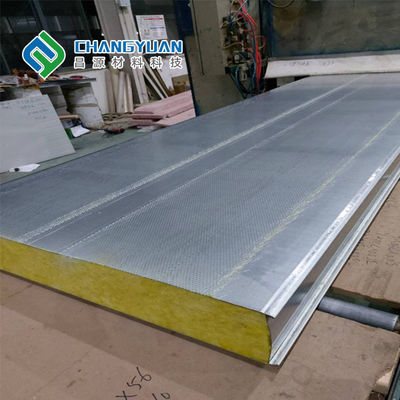
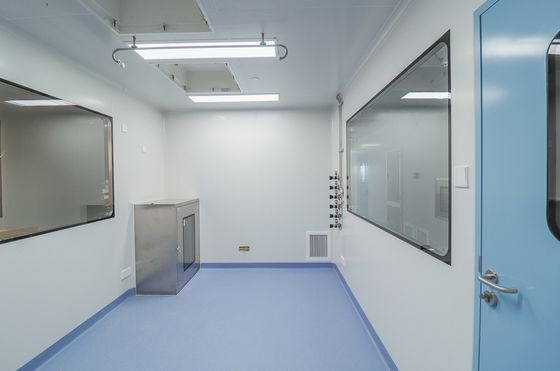
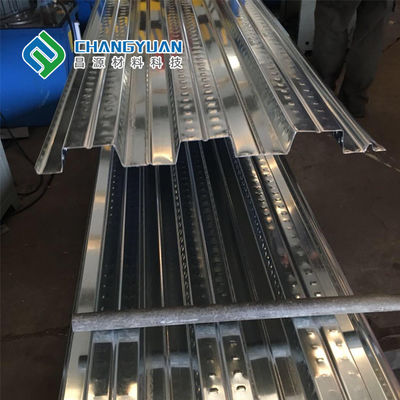
Aluminum-magnesium-manganese composite panels are more suitable for production in summer. The key points are suitable temperature, good coating curing, high bonding strength, excellent sheet toughness, high production efficiency, and low waste rate.
1. Temperature adaptation, better material performance
Summer (20–35℃): The aluminum-magnesium-manganese alloy has good ductility and plasticity, and is less likely to produce micro-cracks during rolling, bending, and edge locking, with high forming accuracy and low springback.
Winter (<5℃): The material becomes brittle and loses its toughness, making it prone to cracking during processing; sealant cures slowly and has poor adhesion, making it prone to water leakage.
2. Optimal coating curing quality (key point)
The fluorocarbon (PVDF)/polyester coating needs to be fully processed, flattened, and cross-linked to cure at 20–35℃, achieving the best adhesion, hardness, and weather resistance.
In summer, with abundant sunlight and stable temperature and humidity, the coating is less likely to bubble, have pinholes, or show color differences; in winter, incomplete low-temperature curing makes it prone to powdering, peeling, and fading.
3. High composite bonding strength, preventing delamination and bulging
The thermal bonding of aluminum-magnesium-manganese panels with rock wool / glass fiber core materials requires a temperature of 25–35℃. The adhesive molecules have high activity and good penetration, resulting in higher peel strength.
Winter low temperatures cause poor bonding and subsequent bulging / delamination, which is more obvious in high-temperature environments.
4. High production efficiency, lower cost
Summer does not require additional heating / insulation, and the equipment operates stably with low energy consumption and high efficiency.
Winter requires preheating of the panels, equipment, and workshop, resulting in high energy consumption, long construction period, and increased waste rate.
5. Low residual stress, more stable dimensions
Summer's environmental temperature is close to the rolling / composite temperature of the panels, resulting in uniform cooling and low residual stress, making them less likely to deform,拱起 in the later stage.
Winter has large temperature differences and uneven cooling, resulting in high internal stress, easy warping, and wave-shaped deformation after installation.
6. Main risks of winter production
Panel cracking, micro-cracks, and leakage at the edge locking area.
Poor coating curing, poor adhesion, and easy peeling.
Poor bonding of the composite layer, bulging, and delamination.
Poor dimensional stability, deformation, and拱起. Summary
Summer (20–35℃) is the golden period for producing aluminum-magnesium-manganese composite panels, which can significantly improve the forming quality, coating performance, bonding strength, dimensional stability, and reduce the scrap rate and overall cost.


 Your message must be between 20-3,000 characters!